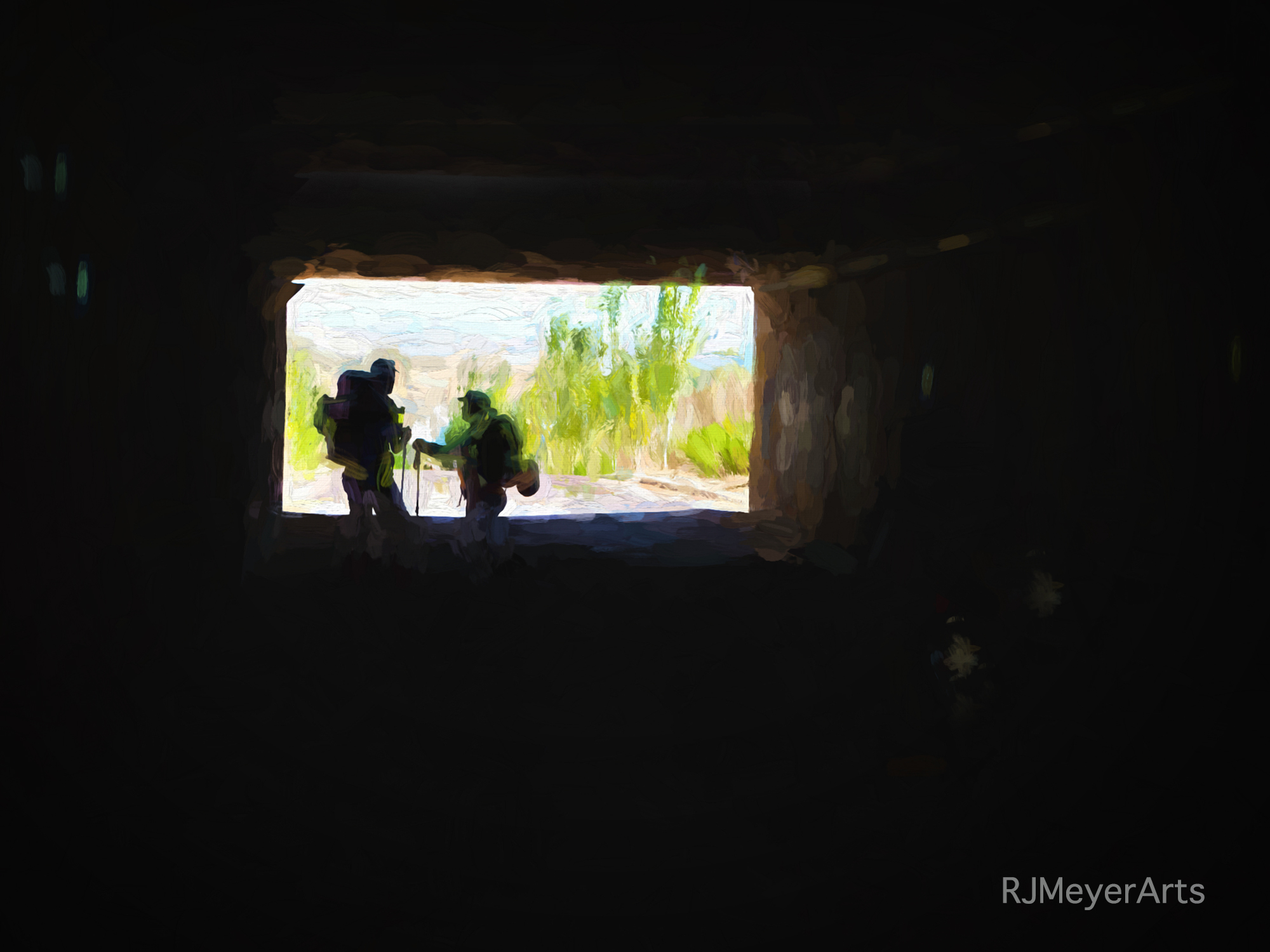
On the way to Logrono, two hikers take respite from the heat in the shade of a tunnel along the Camino de Santiago in northern Spain .
Click on image for a larger viewing window.

On the way to Logrono, two hikers take respite from the heat in the shade of a tunnel along the Camino de Santiago in northern Spain .
Click on image for a larger viewing window.

Keep on dancing…
Image by Joyce Meyer / Edited using Topaz Impressions 2 and Photoshop cc

2016 Rigdon/Meyer Camino (Unfinished Business) blog post links are available in chronological order on one page. Several posts include a short video of the day and we are relieved that we aren’t still looking for Randy somewhere in France!
So, grab a cup of coffee or a glass of wine, click on the photo below and travel along with Randy, Joyce & Joan. ~Buen Camino!

For more of our escapades, including hiking the West Highland Way in Scotland, go to rjmeyerarts.com


…because life isn’t always easy.

When I first started hiking a number of years ago, a fellow hiker gave me some important advice, “Don’t forget to look back.” When I see a memorable view I capture it with a camera so that I can revisit this moment in time. If the view is mediocre I turn back and resume hiking along my merry way with camera packed. As a photographer I have found this advice helpful, but even more I find it applies to life.
We all know life isn’t always pretty and we may stumble and step in crap from time to time. Learn, move on, without dwelling on these unfortunate moments. Likewise, there may be some unattractive elements in an image, but look beyond and see the beauty…

Hard work + mental toughness + discipline = wrestling


Forget the glass slippers, this princess wears cleats.





Upon reading the translation of the Mayan Prayer to the Seven Directions, I sense gratitude and hope. (Click on link for full prayer)*Excerpts from the prayer: May wisdom be transformed into right action… bless us with harmonies to end all war… all hail the harmony of mind and nature. I may have a different belief system and pray to a different God than the Ancient Mayans, but I also find their prayer timeless in an earthly sense. Peace out.
*Prayer of the Seven Directions from thejewelledsky.com

 The prairie is my favorite place in the world. This is home…


